Choosing an advertising channel can become expensive when you do not know what you are buying. You may find different claims about ad formats, targeting, pricing, and campaign tools, but unclear information makes it harder to plan a safe budget.
FeedBuzzard advertising gives businesses another way to promote products, services, websites, and brands through a content-focused digital environment. FeedBuzzard’s own advertising material describes campaign options, creative formats, audience targeting, budgets, and performance measurement.
This guide explains what advertisers should know before starting, including how the process works, what to ask for, how to measure results, and how to avoid wasting money.
What Is FeedBuzzard Advertising?
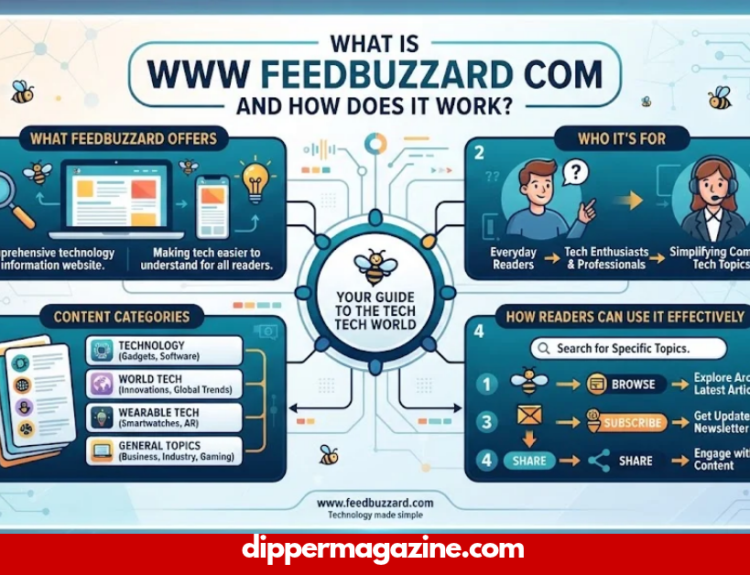
FeedBuzzard advertising refers to promotional opportunities connected with FeedBuzzard.com. The website presents itself as a technology-focused publication, while its advertising pages describe ways for marketers to promote products and services to its audience.
The important point is to understand exactly what you are purchasing. An advertiser may be buying a specific placement, sponsored content, or another advertising format offered by the publisher.
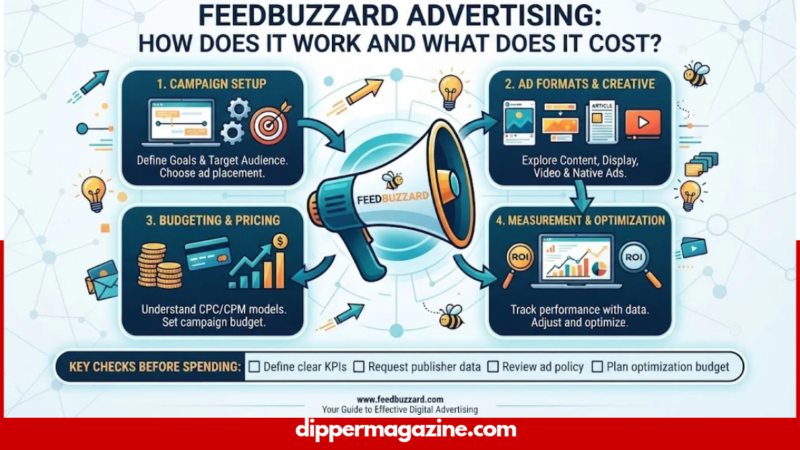
FeedBuzzard’s public advertising guide discusses campaign setup, ad formats, targeting, budgeting, and measurement. However, advertisers should confirm the current media kit, available inventory, minimum spend, and final rates directly before making a payment.
FeedBuzzard advertising is a way for businesses to promote their brand or offer through advertising opportunities associated with FeedBuzzard. The exact format, placement, targeting options, and price should be confirmed with the current advertising team.
How Does FeedBuzzard Advertising Work?
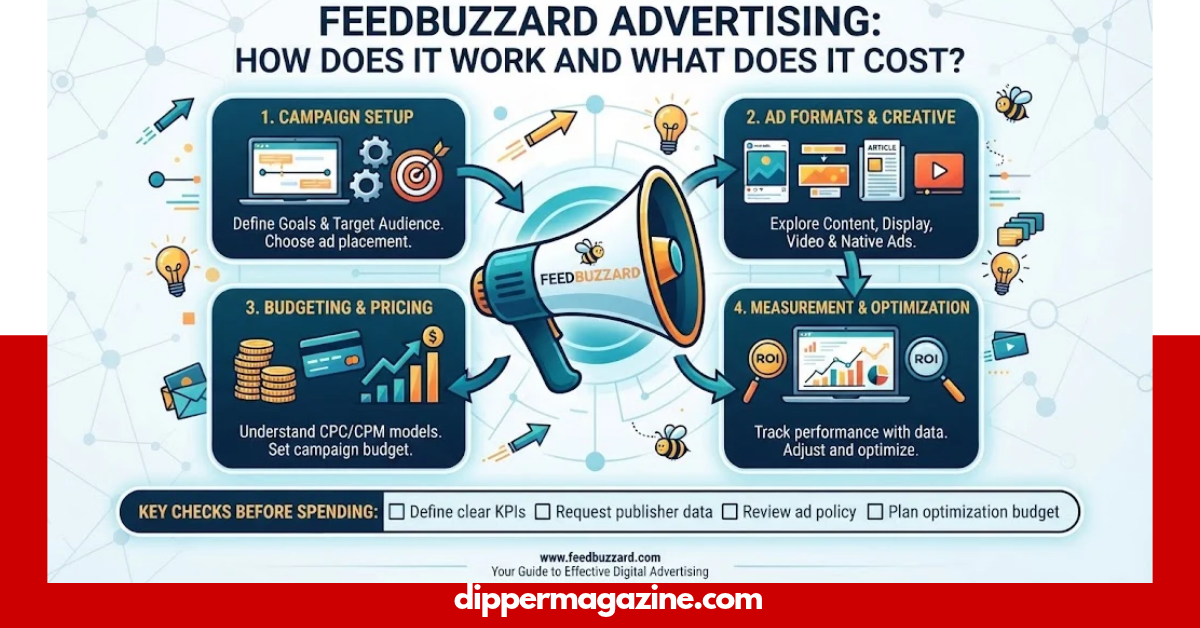
The basic process follows the same practical path used by many digital publishers and advertising platforms.
First, an advertiser identifies the campaign goal. The goal might be brand awareness, website traffic, product promotion, lead generation, or another measurable business objective.
Next, the advertiser selects an appropriate ad format and provides the required creative materials. Depending on the current inventory, this may include display creative, native-style content, video material, or sponsored content.
FeedBuzzard’s published advertising guide also discusses targeting, budgeting, creative specifications, and campaign measurement.
A Simple Campaign Flow
- Define the goal
- Identify the target audience
- Choose an advertising format
- Prepare the creative
- Confirm price and placement
- Launch the campaign
- Monitor traffic and engagement
- Review the results
- Improve the next campaign
This process helps prevent a common mistake: buying advertising before deciding what success should look like.
What Advertising Formats Can You Use?
The available formats can change, so advertisers should request the current media kit before planning a campaign. FeedBuzzard’s public advertising material discusses several forms of digital promotion.
| Advertising Format | How It Can Be Used | Best Suited For |
| Native advertising | Promotion designed around the surrounding content experience | Brand awareness |
| Display/banner ads | Visual promotion placed in designated areas | Product visibility |
| Sponsored articles | Detailed promotional content | Education and brand storytelling |
| Video placements | Visual and audio brand messages | Product demonstrations |
| Content promotion | Promoting useful branded material | Traffic and awareness |
| Newsletter opportunities | Promotion through an email audience when available | Direct audience exposure |
Do not assume every format is available at all times. Ask for current specifications, dimensions, placement details, campaign duration, and reporting information before paying.
What Can You Promote Through FeedBuzzard?
The right campaign depends on the advertiser’s product and the audience it wants to reach.
Technology companies may use advertising to introduce software, applications, devices, online services, or digital products. Other businesses may use sponsored content to explain a service or introduce a new brand.
A good campaign should match the audience and the content environment. Google also emphasizes that advertising destinations should provide unique value and remain useful and easy to navigate.
Potential campaign categories include:
- Software and SaaS products
- Mobile applications
- Technology products
- Online services
- E-commerce brands
- Digital tools
- Business services
- New product launches
- Educational resources
- Brand awareness campaigns
Before committing to a campaign, check whether the actual FeedBuzzard audience matches your customers.
Who Is the Target Audience?
Audience fit matters more than simply purchasing impressions.
FeedBuzzard describes its publication around technology and related digital topics, including technology-focused content and wearable devices. Its advertising materials discuss audience targeting and campaign selection.
For an advertiser, this means the first question should be:
“Are FeedBuzzard readers relevant to my business?”
For example, a software company may have a natural connection with a technology-focused readership. A business selling a highly local service may need to check geographic reach before spending money.
Audience Checklist
Before launching, ask for:
- Main countries of visitors
- Monthly page views
- Monthly unique visitors
- Desktop versus mobile traffic
- Main content categories
- Audience interests
- Average campaign impressions
- Historical click data, if available
- Geographic breakdown
- Traffic source breakdown
These figures help you compare the advertising opportunity with your actual customer profile.
How Much Does FeedBuzzard Advertising Cost?
There is no single price that should be assumed for every FeedBuzzard campaign.
FeedBuzzard’s public advertising information discusses campaign budgets and pricing approaches, but advertisers should confirm the current rate card and available inventory directly.
The final cost can depend on factors such as:
- Ad format
- Placement
- Campaign duration
- Number of impressions
- Targeting requirements
- Creative requirements
- Sponsored-content requirements
- Geographic audience
- Campaign objectives
Pricing Questions to Ask
Before sending money, ask:
- What is the minimum campaign budget?
- Is pricing based on CPM, CPC, a flat placement fee, or another model?
- How many impressions are included?
- How long will the campaign run?
- Is creative production included?
- Are there additional setup fees?
- What reporting will I receive?
- Can I pause the campaign?
- What happens if the promised inventory is not delivered?
- Is there a current media kit or rate card?
Getting these answers in writing makes the campaign easier to evaluate.
What Targeting Options Are Available?
Targeting helps advertisers avoid showing the same message to every visitor.
FeedBuzzard’s advertising material describes targeting and campaign controls, but the exact options should be confirmed for the current advertising product.
Depending on the available campaign system, useful targeting categories may include:
- Geography
- Device type
- Content interests
- Keywords
- Audience characteristics
- Campaign timing
- Content category
However, never assume a targeting option exists simply because another advertising platform offers it.
Ask the sales or advertising team for a current list of targeting controls. This prevents you from building a campaign around a feature that is not actually available.
What Creative Should You Prepare?
Strong creative makes the advertising message easier to understand.
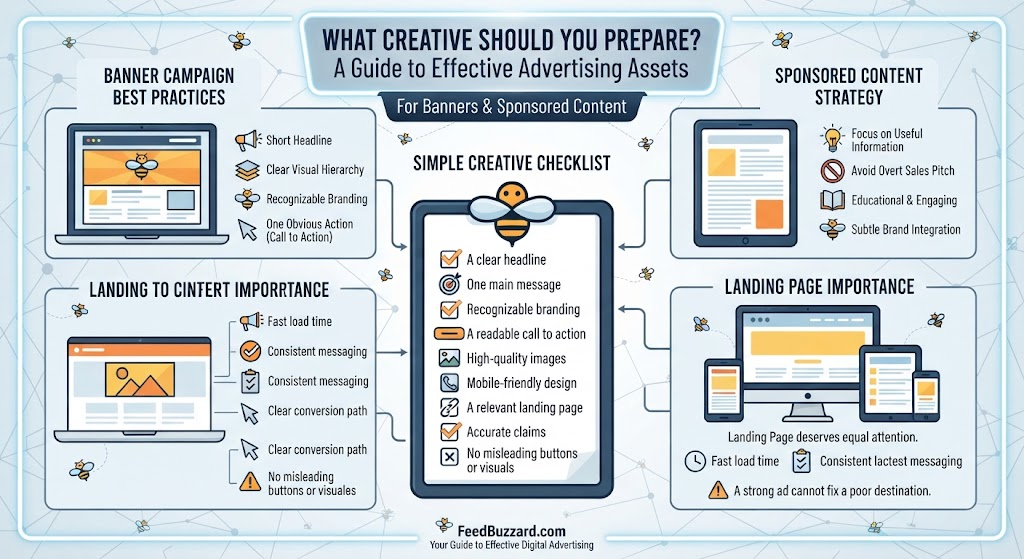
For a banner campaign, use a short headline, clear visual hierarchy, recognizable branding, and one obvious action. For sponsored content, focus on useful information rather than turning the entire article into a sales pitch.
Google’s advertising policies emphasize clear, relevant advertising and functional destinations.
Simple Creative Checklist
Your advertisement should have:
- A clear headline
- One main message
- Recognizable branding
- A readable call to action
- High-quality images
- Mobile-friendly design
- A relevant landing page
- Accurate claims
- No misleading buttons or visuals
The landing page deserves the same attention as the advertisement. A strong ad cannot fix a confusing or slow destination.
How Should You Measure Campaign Performance?
Do not judge an advertising campaign only by how many people saw it.
Use several measurements to understand what happened after the campaign launched.
| Metric | What It Tells You |
| Impressions | How many times the ad was displayed |
| Clicks | How many users interacted with the advertisement |
| CTR | Percentage of impressions that produced clicks |
| CPC | Average cost for each click |
| Conversions | Desired actions completed |
| Conversion rate | Percentage of visitors who converted |
| CPA | Cost associated with each acquisition |
| Landing-page engagement | How visitors behaved after clicking |
| Revenue | Business value generated by the campaign |
For example, a campaign can receive many clicks but produce few sales. Another campaign may generate fewer clicks but bring highly relevant visitors.
The second campaign may deserve further testing, depending on the business objective.
Is FeedBuzzard Advertising the Same as Google Ads?
No. The two should not be treated as identical products.
Google Ads is Google’s advertising system, while advertising through a publisher such as FeedBuzzard can involve buying exposure within that publisher’s available inventory.
Google provides extensive advertising policies covering ad quality, destinations, placement, and user experience.
The practical difference is important:
| Factor | FeedBuzzard Advertising | Google Ads |
| Basic model | Publisher/platform advertising opportunity | Large advertising network |
| Inventory | FeedBuzzard-related inventory | Google and participating inventory |
| Campaign setup | Confirm current process with FeedBuzzard | Managed through Google Ads |
| Targeting | Confirm current options | Extensive documented targeting |
| Pricing | Confirm current rate card | Auction-based pricing varies |
| Reporting | Confirm available reporting | Detailed platform reporting |
| Best approach | Test based on audience fit | Build campaigns around defined search/display goals |
This does not mean one automatically produces better results. The right channel depends on your audience, objective, creative, budget, and measurement method.
How Can You Start a FeedBuzzard Campaign?
Starting a campaign should be straightforward when you have the correct information.
Step 1: Define Your Objective
Choose one primary goal.
For example:
- Increase brand awareness
- Generate website visits
- Promote a new product
- Generate leads
- Promote an article
- Introduce a service
Step 2: Identify Your Audience
Write down the countries, interests, devices, and customer type you want to reach.
Step 3: Request Current Advertising Information
Ask FeedBuzzard for the current:
- Media kit
- Rate card
- Ad specifications
- Available placements
- Targeting options
- Minimum budget
- Campaign duration
- Reporting details
Step 4: Prepare Your Creative
Create the advertisement according to the supplied technical requirements.
Step 5: Use a Trackable Landing Page
Add appropriate analytics and campaign tracking so you can identify traffic and conversions.
Step 6: Launch and Monitor
Watch impressions, clicks, traffic quality, conversions, and cost.
Step 7: Review Before Scaling
Do not increase the budget simply because the campaign received impressions. Review the business result first.
What Should You Verify Before Paying?
This is one of the most important parts of FeedBuzzard advertising.
Public information about advertising can change. Different websites may also repeat claims about traffic, pricing, targeting, or performance without providing first-party evidence.
Use FeedBuzzard’s own website and direct advertising contact as your starting point.
Verification Table
| Information | What to Verify |
| Domain | Confirm you are dealing with the intended FeedBuzzard website |
| Advertising contact | Use contact information published by the site |
| Pricing | Request the current rate card |
| Traffic | Request recent first-party traffic information |
| Audience | Check countries and audience interests |
| Ad format | Confirm exactly what is included |
| Placement | Ask where the advertisement will appear |
| Duration | Confirm campaign start and end dates |
| Reporting | Ask what metrics will be supplied |
| Payment | Confirm invoice and payment terms |
| Refunds | Ask about cancellation or undelivered inventory |
This due-diligence step is especially important for smaller advertising properties where public pricing may not be available.
How Do You Avoid Wasting Your Advertising Budget?
Start with a controlled test rather than committing your entire marketing budget immediately.
A small campaign can help answer important questions:
- Does the audience match your customers?
- Does the creative attract attention?
- Do visitors stay on the landing page?
- Are users taking the desired action?
- Is the cost reasonable for your business?
- Can the campaign generate measurable results?
Also avoid misleading creative. Google publisher policies prohibit practices that encourage accidental clicks or confuse advertisements with navigation or content.
The same principle is useful even when you are not using Google ads: clear advertising creates a better experience and gives you cleaner performance data.
What Are Common FeedBuzzard Advertising Mistakes?
Many advertising problems happen before the campaign even starts.
1. Buying Without Checking the Audience
Large traffic numbers do not automatically mean valuable customers.
2. Focusing Only on Impressions
Visibility matters, but business results usually require deeper measurements.
3. Using a Weak Landing Page
If the landing page is slow, confusing, or unrelated to the advertisement, paid traffic can be wasted.
4. Trusting Unverified Pricing Claims
Do not rely on an old article or third-party post for today’s advertising price.
5. Skipping Tracking
Without analytics and campaign tracking, it becomes difficult to understand where conversions came from.
6. Making the Ad Too Complicated
One clear message usually makes an advertisement easier to understand.
7. Scaling Too Early
Test first. Scale after you have useful performance data.
Is FeedBuzzard Advertising Worth Testing?
The answer depends on your campaign objective and audience fit.
FeedBuzzard advertising may make sense to test when your customers overlap with the site’s audience and you can measure the campaign properly. It is less useful to treat any advertising placement as an automatic source of sales or guaranteed traffic.
A sensible evaluation should consider:
- Audience relevance
- Verified traffic
- Placement quality
- Cost
- Campaign duration
- Tracking
- Conversion performance
- Landing-page quality
The strongest approach is to treat the first campaign as a measurable test. Use the results to decide whether the channel deserves more budget.
FeedBuzzard Advertising Checklist
Before launching, use this quick checklist:
- Define one main campaign goal
- Confirm the target audience
- Request the current media kit
- Confirm the advertising price
- Confirm campaign duration
- Confirm exact ad placement
- Check creative specifications
- Ask about available targeting
- Ask how performance is reported
- Set up campaign tracking
- Check the landing page
- Start with a controlled test
- Review conversions before scaling
This simple process can protect your budget while giving you useful information about the channel.
Frequently Asked Questions
FeedBuzzard advertising is a promotional opportunity connected with FeedBuzzard that allows businesses to present products, services, brands, or content to its audience. Available formats and campaign conditions should be confirmed directly because advertising offerings can change.
There is no single price that applies to every campaign. Cost can depend on the format, placement, duration, audience, targeting, and campaign arrangement, so request the current rate card before paying.
Public FeedBuzzard advertising material discusses formats such as native-style advertising, display placements, video, and sponsored content. The exact inventory should be confirmed with the advertising team before creating your campaign.
Yes, a small business can consider testing the channel if its audience matches FeedBuzzard’s readership and the campaign can be measured. A small controlled test can provide useful performance data before a larger investment.
Track impressions, clicks, CTR, website engagement, conversions, CPA, and revenue where applicable. Campaign tracking links and analytics can help separate paid traffic from other website visitors.
You should verify the current price, placement, audience, campaign duration, reporting, and payment terms before sending money. Ask for the current advertising information directly rather than relying only on third-party articles.
Conclusion
FeedBuzzard advertising can be useful when the audience, placement, price, and campaign goal fit your business. The key is not to treat advertising as a guaranteed source of traffic or sales. Instead, verify the current offer, build a clear advertisement, use a relevant landing page, track the campaign, and judge the results using real business metrics.
FeedBuzzard’s own advertising material provides information about campaign formats, targeting, budgeting, and measurement, while Google’s publisher and advertising guidance reinforces the importance of clear ads, useful destinations, and a good user experience.
If you are considering a campaign, start with the questions in the verification table and request the latest media kit or rate information. That gives you a clearer basis for deciding how much, if anything, to invest.