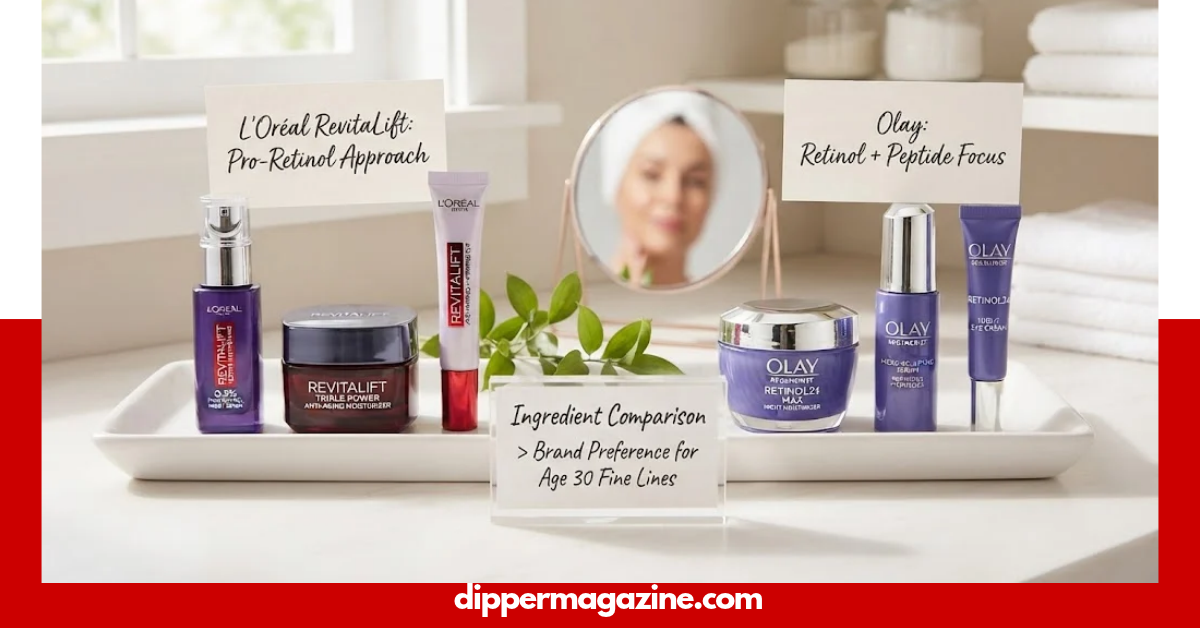
If you are a 30-year-old working mom choosing between Olay and L’Oréal Paris, both brands offer useful moisturizer options, but they approach skincare a little differently.
Olay has a strong focus on niacinamide, peptides, hyaluronic acid, vitamin C, and barrier-supporting ingredients across its range. L’Oréal Paris offers a broad selection that includes hyaluronic acid, ceramides, vitamin C, Pro-Retinol, SPF, and targeted anti-aging formulas.
For a busy mom, the most practical choice depends less on the brand name and more on your skin type, main concern, routine, fragrance tolerance, and whether you need daytime sun protection.
Why This Comparison Matters for a Working Mom
A working mom often needs skincare that is simple, comfortable, and easy to use consistently.
Long workdays, makeup, air conditioning, outdoor exposure, stress, and limited time can make a complicated routine difficult to maintain. A moisturizer should therefore do its main job well: help keep the skin hydrated while fitting easily into your morning or evening routine.
The good news is that you do not need ten products to build a useful routine. A gentle cleanser, moisturizer, and appropriate sunscreen can provide a practical foundation.
The American Academy of Dermatology recommends choosing moisturizer according to skin type and looking for ingredients such as ceramides and hyaluronic acid when hydration is a priority.
Olay vs L’Oréal: At-a-Glance Comparison
| Feature | Olay | L’Oréal Paris |
| Hydration | Strong range of hydrating formulas | Strong range of hydrating formulas |
| Hyaluronic acid | Available in several products | Widely used across RevitaLift products |
| Niacinamide | Major ingredient focus | Present in selected formulas |
| Peptides | Available in several Olay products | Available in selected skincare products |
| Vitamin C | Available | Widely used in targeted products |
| Retinol/Pro-Retinol | Available across anti-aging range | Strong presence in RevitaLift |
| Ceramides | Available in selected products | Featured in several RevitaLift formulas |
| SPF moisturizers | Available | Several options |
| Lightweight choices | Yes | Yes |
| Anti-aging focus | Strong | Strong, particularly RevitaLift |
| Sensitive-skin options | Depends on formula | Depends on formula |
| Best approach | Ingredient-focused routine | Targeted concern-based routine |
Product formulas can change, so always check the current ingredient list on the package or official product page before purchasing.
How Olay Moisturizers Perform
Olay has built a large skincare range around ingredients such as niacinamide, hyaluronic acid, vitamin C, peptides, vitamin E, and retinol-related formulas.
Its current product collection includes moisturizers and treatments designed around different concerns, including hydration, texture, uneven tone, and visible signs of aging.
One example is Olay Super Cream, which contains niacinamide, vitamin C, sodium hyaluronate, vitamin E, a peptide, and pro-vitamin B5. The formula also contains sunscreen filters, making it different from a basic nighttime moisturizer.
What Olay Does Well
Olay can be particularly useful if you want a moisturizer that combines several skincare-supporting ingredients in one product.
Potential benefits include:
- Daily hydration
- Support for the skin barrier
- Smoother-looking skin
- Help with the appearance of uneven tone
- Support for a simple anti-aging routine
- Convenient multi-ingredient formulas
For someone with limited time in the morning, this ingredient combination can make a routine easier to maintain.
How L’Oréal Paris Moisturizers Perform
L’Oréal Paris has an extensive moisturizer range covering hydration, brightening, firmness, anti-aging, and SPF.
Its RevitaLift collection is particularly focused on visible signs of aging. Current products include formulas featuring Pro-Retinol, hyaluronic acid, vitamin C, ceramides, and niacinamide, depending on the product.
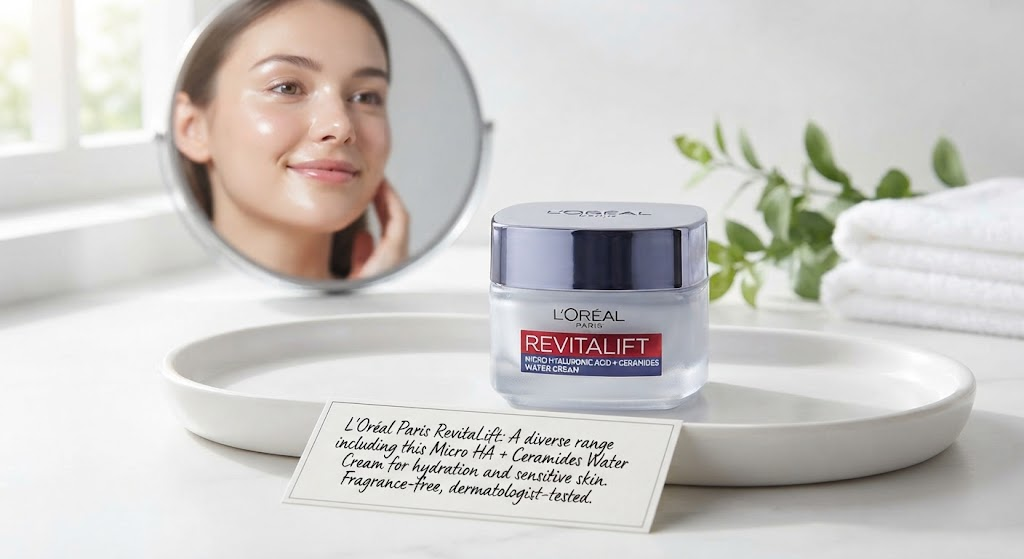
For example, the RevitaLift Micro Hyaluronic Acid + Ceramides Water Cream is fragrance-free and designed around hyaluronic acid and ceramides. L’Oréal says the formula is dermatologist tested and suitable for sensitive skin, although individual reactions can still vary.
What L’Oréal Does Well
L’Oréal Paris can work well when you want to select a moisturizer according to one specific concern.
Its range includes products designed for:
- Dehydrated skin
- Fine lines
- Loss of firmness
- Dull-looking skin
- Uneven-looking tone
- Nighttime hydration
- Daytime SPF protection
This makes the brand useful if you prefer a more targeted skincare routine.
Which Brand Has Better Hydration?
There is no universal winner because hydration depends on the specific formula and your skin type, not simply the brand.
Both Olay and L’Oréal use well-known moisturizing ingredients. Hyaluronic acid is found in products from both brands, while glycerin and other conditioning ingredients appear throughout many moisturizer formulas.
The American Academy of Dermatology notes that moisturizers work by adding moisture to the skin and helping prevent water from escaping. It also identifies hyaluronic acid and ceramides as useful ingredients to look for when choosing a moisturizer.
If Your Skin Is Dry
Look for:
- Cream-based textures
- Hyaluronic acid
- Ceramides
- Glycerin
- Richer emollients
Apply moisturizer while your skin is still slightly damp when possible. This can help retain moisture.
If Your Skin Is Oily
A lighter gel, lotion, or water-cream texture may feel more comfortable.
Look for labels such as:
- Oil-free
- Non-comedogenic
- Won’t clog pores
The AAD specifically recommends these descriptions for people concerned about moisturizer-related breakouts.
Olay vs L’Oréal for Fine Lines at Age 30
At 30, you do not necessarily need an aggressive anti-aging routine.
Fine lines can become more visible when skin is dry or dehydrated. A good moisturizer can make the skin look smoother and more comfortable by improving hydration.
If your primary concern is fine lines, compare the actual active ingredients rather than choosing only by brand.
L’Oréal’s RevitaLift range includes products with Pro-Retinol, while Olay offers products built around retinol-related and peptide-focused skincare.
A gradual approach is usually easier to maintain than adding several active products at once.
Which Is Better for Busy Morning Routines?
For a working mom, convenience matters.
A practical morning routine could look like this:
- Gentle cleanser
- Optional serum
- Moisturizer
- Broad-spectrum sunscreen
- Makeup, if desired
A moisturizer containing SPF can reduce the number of morning steps, but check its protection level and how much you need to apply.
The AAD recommends broad-spectrum sunscreen with SPF 30 or higher and advises reapplication during extended outdoor exposure.
Olay vs L’Oréal for Sensitive Skin
Sensitive skin requires a closer look at the individual formula.
Do not assume that an entire brand is suitable or unsuitable for sensitive skin. Ingredients such as fragrance can bother some people, while others tolerate them without problems.
For sensitive or easily irritated skin, consider:
- Fragrance-free formulas
- Fewer unnecessary actives
- Gentle cleansers
- Simple moisturizing ingredients
- Patch testing before regular use
For example, L’Oréal’s Hyaluronic Acid + Ceramides Water Cream is listed as fragrance-free and allergy tested.
However, a product being labeled suitable for sensitive skin does not guarantee that every person will tolerate it.
Which Ingredients Should a 30-Year-Old Mom Look For?
Instead of asking only whether Olay or L’Oréal is better, start with your skin’s actual needs.
| Skin Concern | Ingredients to Consider | Why They Matter |
| Dryness | Hyaluronic acid, glycerin, ceramides | Support hydration |
| Dehydration | Hyaluronic acid, glycerin | Help attract and retain water |
| Uneven tone | Niacinamide, vitamin C | Support a brighter-looking complexion |
| Fine lines | Retinol/Pro-Retinol, peptides | Target visible signs of aging |
| Weak skin barrier | Ceramides, gentle moisturizers | Help support moisture retention |
| Oily skin | Lightweight, non-comedogenic formulas | More comfortable daily wear |
| Sensitive skin | Fragrance-free, simple formulas | May reduce irritation triggers |
| Daytime protection | Broad-spectrum SPF 30+ | Helps protect against UV exposure |
Ingredient lists are more useful than marketing claims alone. The FDA states that cosmetic labeling claims must be truthful and not misleading, and cosmetic products are generally not FDA-approved before reaching the market.
Olay vs L’Oréal: What Should You Choose for Dry Skin?
If your main problem is dry, tight, uncomfortable skin, start with a moisturizer designed primarily for hydration.
Olay has multiple hydrating options, while L’Oréal offers formulas centered on hyaluronic acid and ceramides. L’Oréal’s Water Cream, for example, combines hyaluronic acid with three ceramides in its current formula.
The better product for you is the one that:
- Does not leave your skin tight
- Does not cause irritation
- Feels comfortable throughout the day
- Works under makeup
- Fits your budget
- Is easy enough to use consistently
Consistency is more useful than buying an expensive product that sits unused in a drawer.
Olay vs L’Oréal for Oily or Combination Skin
Combination skin can be tricky because the cheeks may feel dry while the forehead and nose become oily.
Choose a moisturizer based on how your skin behaves rather than how old you are.
A lightweight gel or water-cream can work well during warmer weather. If your cheeks remain dry, you can apply a slightly richer layer only to those areas.
This approach can also make your routine more comfortable in hot or humid climates.
Olay vs L’Oréal for Anti-Aging Skincare
Both brands have anti-aging products, but their formulas differ.
L’Oréal’s RevitaLift range currently includes moisturizers with Pro-Retinol and other targeted ingredients. Its Triple Power SPF 30 moisturizer combines Pro-Retinol, hyaluronic acid, and vitamin C.
Olay also offers a broad anti-aging collection featuring ingredients such as niacinamide, peptides, retinol-related formulas, vitamin C, and hyaluronic acid.
At 30, focus on a sustainable routine instead of trying to use every anti-aging ingredient at once.
The AAD advises focusing on your main aging-related concern and warns that using several anti-aging products within a short period can irritate the skin.
Can You Use Olay and L’Oréal Together?
Yes, you can use products from both brands if the formulas work well together.
You do not have to choose one brand for your entire routine.
For example:
Morning
- Gentle cleanser
- Olay or L’Oréal moisturizer
- Broad-spectrum sunscreen
Evening
- Cleanser
- Targeted serum, if needed
- Olay or L’Oréal moisturizer
If you use a retinol or Pro-Retinol product, introduce it carefully rather than adding several strong actives at the same time.
A Simple Skincare Routine for a Busy 30-Year-Old Mom
You can keep your routine surprisingly short.
Morning
Step 1: Cleanse
Use a gentle cleanser if your skin needs it.
Step 2: Moisturize
Choose Olay or L’Oréal based on your skin type and concern.
Step 3: Protect
Use broad-spectrum SPF 30 or higher when appropriate.
Night
Step 1: Remove makeup and sunscreen
Clean the skin thoroughly without harsh scrubbing.
Step 2: Treatment
Use a targeted serum only if you actually need one.
Step 3: Moisturize
Finish with a comfortable moisturizer.
This routine takes only a few minutes and is easier to maintain during busy mornings and evenings.
How to Pick Between Olay and L’Oréal in 5 Steps
If you are still unsure, use this simple checklist.
1. Identify Your Skin Type
Is your skin:
- Dry?
- Oily?
- Combination?
- Normal?
- Sensitive?
2. Choose One Main Goal
Pick your biggest concern:
- Hydration
- Fine lines
- Dullness
- Uneven tone
- Firmness
- Skin barrier
3. Check the Ingredient List
Do not buy a product simply because the front label sounds impressive.
Read the current ingredient list and look for ingredients that match your goal.
4. Consider Your Daily Schedule
If you have little time, a moisturizer that fits easily into your routine can be more practical than a complicated seven-step system.
5. Give Your Routine Time
Avoid changing several products at once.
When you introduce one product at a time, it becomes easier to identify what your skin likes or dislikes.
Common Mistakes to Avoid
Even a high-quality moisturizer can become a poor choice if you use it incorrectly.
Avoid these mistakes:
- Buying based only on brand popularity
- Ignoring your skin type
- Using too many active ingredients
- Skipping sunscreen during daytime exposure
- Applying strong products too frequently
- Assuming expensive means better
- Ignoring irritation
- Changing products every few days
- Expecting moisturizer alone to solve every skin concern
Skincare works best when the routine is realistic enough to follow consistently.
and Trust: What Should You Check?
Good skincare content should separate brand claims from independent guidance.
Olay and L’Oréal provide product-specific information, including ingredient lists and intended benefits. Dermatology guidance from the American Academy of Dermatology provides broader recommendations about moisturizers, skin types, anti-aging products, and sunscreen.
The FDA also provides useful regulatory context about cosmetic claims and labeling.
When researching a moisturizer, prioritize:
- Current ingredient lists
- Official product information
- Dermatology guidance
- Your own skin response
- Professional advice when you have persistent skin problems
Frequently Asked Questions
There is no universal answer. Olay and L’Oréal both offer moisturizers with ingredients aimed at hydration, visible signs of aging, and other skincare concerns. Your skin type and the specific formula matter more than the brand name.
Yes, Olay offers products that can fit a simple daily routine. Its range includes formulas featuring ingredients such as niacinamide, hyaluronic acid, peptides, vitamin C, and retinol-related ingredients.
Some L’Oréal Paris moisturizers are specifically formulated for visible signs of aging. The RevitaLift range includes products containing Pro-Retinol, hyaluronic acid, vitamin C, and other targeted ingredients.
Yes, depending on the specific product. Check whether your moisturizer contains SPF and what level of protection it provides. If it does not provide adequate broad-spectrum protection, use a separate sunscreen.
Both have hydrating choices. Look for ingredients such as hyaluronic acid, glycerin, and ceramides, then select the texture that keeps your skin comfortable without irritation.
You can, but you do not need an aggressive routine. Daily moisturizing, appropriate sun protection, and one targeted treatment for your main concern can create a simple foundation. The AAD recommends focusing on your primary concern rather than using many anti-aging products simultaneously.
Conclusion
The question “I’m a 30-year-old working mom. How do Olay moisturizers perform compared to L’Oréal’s skincare line?” does not have to end with choosing an entire brand.
Both Olay and L’Oréal offer useful moisturizers with ingredients such as hyaluronic acid, niacinamide, peptides, vitamin C, ceramides, and retinol-related ingredients. The right choice depends on whether your priority is hydration, fine lines, uneven tone, sensitive skin, oily skin, or daytime protection.
For a busy schedule, keep your routine simple: cleanse, moisturize, protect your skin from the sun, and add targeted treatments only when you actually need them.
Before buying, compare the exact product formula, check the current ingredient list, and choose the texture you can comfortably use every day. That practical approach is more valuable than chasing a single “best” skincare brand.