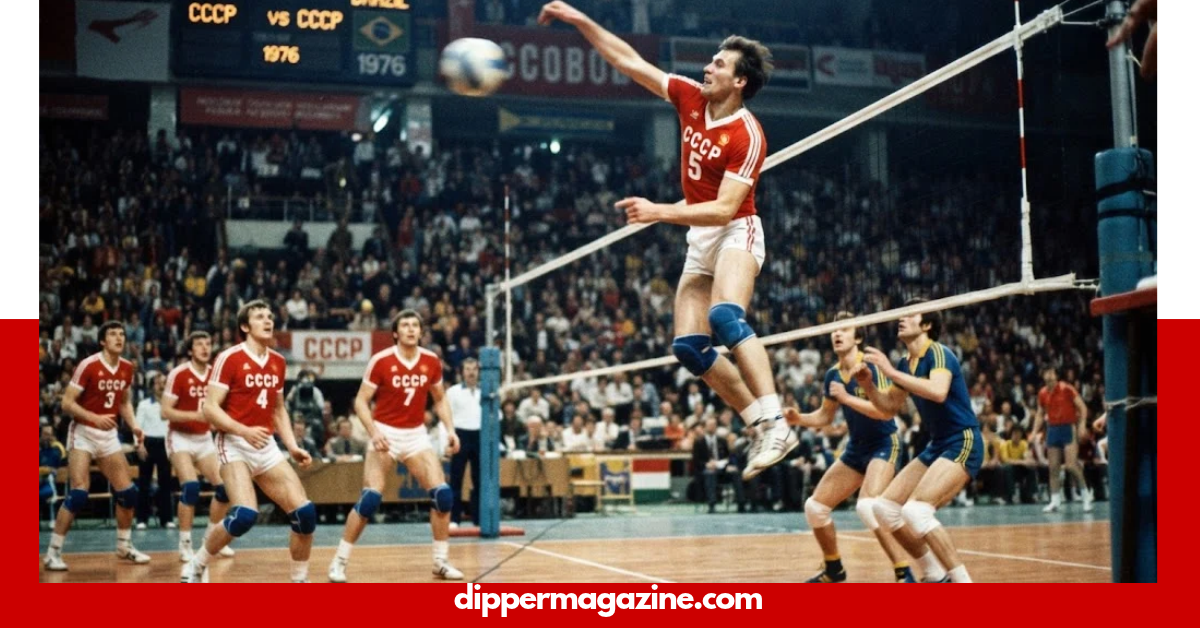
What happens behind an Olympic medal? the flying elephant memoirs of an olympic champion alexander savin offers a first-person route into that question through the career of Soviet volleyball champion Alexander Savin. His story connects elite training, international competition, teamwork, Olympic pressure, and the changing world of Soviet sport. Savin won Olympic silver in Montreal in 1976 and gold in Moscow in 1980, later entering the International Volleyball Hall of Fame.
What Is The Flying Elephant Memoir About?
the flying elephant memoirs of an olympic champion alexander savin is the English-language version of Savin’s memoir, centered on his life and career in volleyball.
The project has a personal history of its own. Savin’s half-brother, Andrei Savin, described the English translation as a family project that took more than a year and involved Alfredo Cabero and Ioulia Soudakova. He also said the project aimed to preserve the stories of Savin’s teammates, coaches, friends, and the wider volleyball generation around him.
Rather than treating Olympic success as a single event, the memoir provides a way to examine the years of preparation and competition surrounding Savin’s career.
Quick Book Overview
| Detail | Information |
| Book title | The Flying Elephant: Memoirs of an Olympic Champion |
| Author | Alexander Savin |
| Main subject | Volleyball, Olympic competition and personal memories |
| Sport | Indoor volleyball |
| Position | Middle blocker |
| National team | Soviet Union |
| Olympic silver | Montreal 1976 |
| Olympic gold | Moscow 1980 |
| Major club | CSKA Moscow |
| English edition | Kindle format |
| Translation project | Family-led English translation |
| Historical setting | Soviet-era international volleyball |
The English edition is described by Andrei Savin as a Kindle publication available through Amazon. His account also identifies the English project as a collaborative translation involving family members and Alfredo Cabero.
Who Was Alexander Savin?
the flying elephant memoirs of an olympic champion alexander savin becomes easier to understand when readers know the athlete behind the title.
Alexander Borisovich Savin was born on July 1, 1957, in Taganrog. He later grew up in Obninsk and built his senior career with CSKA Moscow, where he played from 1973 through 1988. The official CSKA profile records his Olympic, World Championship, World Cup, European Championship and Soviet club achievements.
The International Volleyball Hall of Fame inducted Savin in 2010. Its official biography identifies him as a male indoor player and documents his Olympic career, including his appearances at Montreal 1976 and Moscow 1980.
Why Is Alexander Savin Important in Volleyball History?
Savin belongs to a major generation of Soviet volleyball players.
His career crossed several important international competitions. CSKA records him as a two-time World Champion, two-time World Cup winner, six-time European champion and 13-time Soviet champion.
His role also extended beyond individual achievement. Volleyball depends heavily on coordinated blocking, setting, attacking and defensive systems, so a middle blocker operates within a larger tactical structure.
The International Volleyball Hall of Fame specifically notes Savin’s contribution to the Soviet team’s return to Olympic success in Moscow.
What Happened to Savin at the 1976 Montreal Olympics?
The 1976 Olympics became an important chapter in the flying elephant memoirs of an olympic champion alexander savin because Savin’s Soviet team reached the men’s volleyball final but finished with silver.
The International Volleyball Hall of Fame states that Savin played in all five Soviet matches at Montreal. The team progressed through pool play and defeated Cuba in the semifinal before losing the final to Poland in a five-set match.
The result gave Savin his first Olympic medal but left the Soviet team without the gold it had targeted.
That experience became part of the competitive background leading toward Moscow four years later.
How Did Savin Win Olympic Gold in 1980?
The Moscow Games changed the Olympic result for Savin.
According to the International Volleyball Hall of Fame, the Soviet Union opened its 1980 tournament with a 3–1 victory over Czechoslovakia and then defeated Italy, Bulgaria and Cuba in pool play. The team beat Romania in the semifinal before defeating Bulgaria 3–1 in the gold-medal match. Savin played in all six matches.
CSKA’s official biography also records Savin as the 1980 Olympic champion and 1976 Olympic silver medalist.
The achievement remains central to the flying elephant memoirs of an olympic champion alexander savin, because the memoir places a personal voice around a career that official records can otherwise describe only through results and titles.
What Was Savin’s Role in Soviet Volleyball?
Savin played as a middle blocker, a position that requires timing, positioning, jumping ability and rapid reactions around the net.
His responsibilities included reading attacks, forming blocks and contributing to offensive combinations. The position also requires close coordination with the setter and other attackers.
The official International Volleyball Hall of Fame biography places Savin within a Soviet team that combined several elite players. His partnership with setter Vyacheslav Zaytsev became part of that team’s wider competitive identity.
How Long Did Savin Play for CSKA Moscow?
Savin represented CSKA from 1973 to 1988, according to the club’s official profile.
His club career overlapped with an unusually successful period for Soviet volleyball. CSKA records multiple Soviet championships and European Champions Cup victories among his club honors.
| Period | Savin’s documented career milestone |
| 1973–1988 | Played for CSKA Moscow |
| 1975 | European champion |
| 1975 | Soviet champion |
| 1976 | Olympic silver medalist |
| 1977 | World Cup winner |
| 1977 | European champion |
| 1978 | World champion |
| 1979 | European champion |
| 1980 | Olympic champion |
| 1981 | World Cup winner |
| 1982 | World champion |
| 1983 | European champion |
| 1985 | European champion |
| 1988 | End of CSKA playing period |
The table summarizes achievements recorded in CSKA’s official biography.
What Does The Memoir Add Beyond Medal Records?
This is where the flying elephant memoirs of an olympic champion alexander savin has particular historical interest.
A medal table can tell readers when Savin won. A memoir can preserve how an athlete remembers the people, places and experiences surrounding those results.
Andrei Savin explained that translating the memoir exposed him to stories involving teammates, coaches and friends from his half-brother’s sporting life. He described the English project as an effort to preserve a generation of volleyball history that might otherwise become harder to access.
Alfredo Cabero, who worked on the English translation, similarly described the project as more than a conventional translation task. He explained that Russian expressions and cultural references often required interpretation so the English edition could retain the meaning behind Savin’s original words.
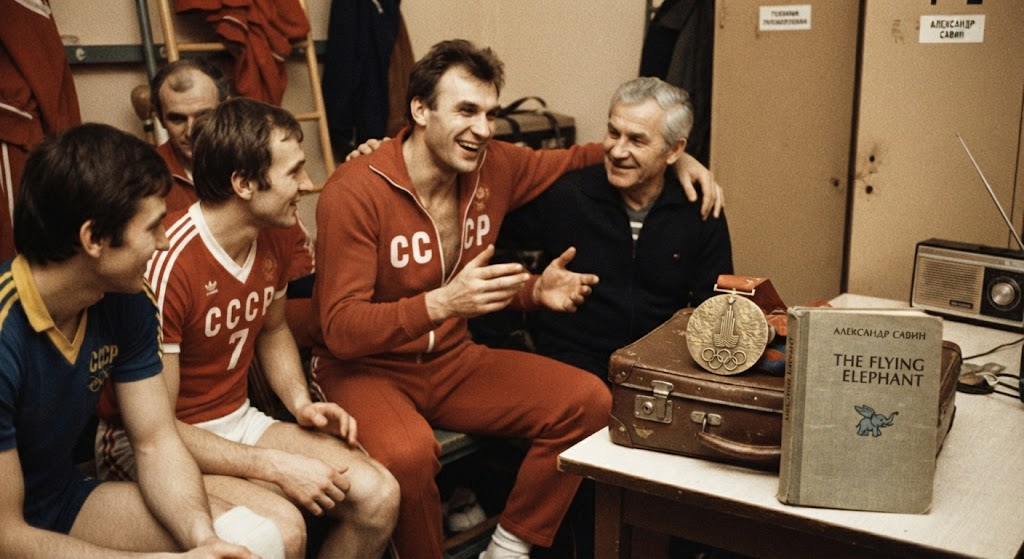
What Themes Appear in The Flying Elephant?
Readers researching the flying elephant memoirs of an olympic champion alexander savin will find several useful themes to explore.
1. Olympic competition
The Olympic Games form a major part of Savin’s documented career, especially the contrast between silver in 1976 and gold in 1980.
2. Teamwork
Volleyball is a team sport, and Savin’s career developed alongside setters, attackers, blockers, coaches and support staff.
3. Training
Elite volleyball requires repeated technical work, physical preparation and tactical discipline. Savin’s career provides a historical example of that process.
4. Soviet sports culture
The memoir offers a personal connection to the Soviet sporting environment from an athlete who experienced it directly.
5. Translation and cultural preservation
The English edition itself represents an attempt to carry a Russian sporting story to a wider audience.
6. Relationships
The translation team has emphasized the importance of the people surrounding Savin, including teammates, coaches, friends and family.
Why Is The Title “The Flying Elephant” Interesting?
The title The Flying Elephant: Memoirs of an Olympic Champion immediately creates a contrast between weight and movement.
Savin was a large and powerful volleyball athlete, while volleyball rewards explosive movement above the net. The image of a “flying elephant” therefore fits naturally with the physical spectacle of a powerful middle blocker moving through the air.
However, readers should distinguish interpretation from documented fact. The primary sources reviewed here establish the book title and Savin’s playing position, but they do not provide a definitive author statement explaining every layer of the title’s symbolism.
That distinction matters when researching the flying elephant memoirs of an olympic champion alexander savin rather than repeating unsupported explanations.
What Can Readers Learn From Savin’s Career?
the flying elephant memoirs of an olympic champion alexander savin can be read as a sports-history source as well as an athlete memoir.
Several practical lessons emerge from the documented career:
- Long-term development matters: Savin’s senior career lasted well over a decade.
- Team systems matter: Olympic volleyball requires coordinated execution rather than individual performance alone.
- Setbacks can become part of a longer career: Savin went from Olympic silver in 1976 to Olympic gold in 1980.
- Consistency creates opportunity: His career included repeated appearances at major international championships.
- Preserving firsthand accounts matters: Memoirs can retain details that medal lists cannot capture.
- Historical context changes how sports records are understood: Savin competed during a distinctive period of international volleyball.
These points do not turn the memoir into a simple motivational manual. They show why an athlete’s firsthand account can complement formal sporting records.
What Happened to Alexander Savin After Playing?
Savin’s involvement with volleyball continued after his playing career.
CSKA records coaching positions in Madagascar, Russia and with Russian youth teams. It also records his work as a state coach for Russian volleyball national teams from 2005 to 2010.
In February 2026, CSKA reported that Savin visited the CSKA Sports Glory Museum and spoke with young volleyball players. The club said he discussed principles of team play, answered questions and showed the Olympic medal he won with the Soviet team in 1980.
That continuing connection with young athletes adds another dimension to the flying elephant memoirs of an olympic champion alexander savin: the story is not limited to his competitive years.
Why Does The English Edition Matter?
The English edition expands access to Savin’s story beyond Russian-speaking readers.
Andrei Savin described the translation as a family project and said the process helped reconnect him with his half-brother’s history. Alfredo Cabero also described the cultural challenges involved in translating Russian expressions and preserving the author’s intended meaning.
That makes the English edition valuable for several audiences:
- Volleyball fans
- Olympic history readers
- Sports historians
- Coaches
- Athletes
- Readers interested in Soviet sports
- People researching Alexander Savin
- Readers interested in sports memoirs
What Makes Savin’s Story Different From a Standard Sports Biography?
A conventional biography often places an author between the reader and the athlete.
A memoir works differently. The athlete’s own memories become the central material, while editors, translators and publishers help make those memories accessible to readers.
That distinction is important when discussing the flying elephant memoirs of an olympic champion alexander savin.
The book can be considered alongside official records rather than replacing them. CSKA documents Savin’s competitive achievements, while the International Volleyball Hall of Fame provides an independent institutional record of his Olympic career.
Alexander Savin Career and Legacy at a Glance
| Category | Verified detail |
| Full name | Alexander Borisovich Savin |
| Birth date | July 1, 1957 |
| Birthplace | Taganrog |
| Sport | Volleyball |
| Position | Middle blocker |
| Club | CSKA Moscow |
| CSKA period | 1973–1988 |
| Olympic debut | Montreal 1976 |
| Olympic 1976 result | Silver |
| Olympic 1980 result | Gold |
| World Championships | Gold in 1978 and 1982 |
| World Cup | Gold in 1977 and 1981 |
| European Championships | Six titles |
| Soviet championships | 13 titles |
| Hall of Fame | International Volleyball Hall of Fame, 2010 |
| Later career | Coaching and sports administration |
| English memoir | The Flying Elephant: Memoirs of an Olympic Champion |
Career information in this table comes from the official CSKA biography and International Volleyball Hall of Fame profile.
Frequently Asked Questions
Answer: the flying elephant memoirs of an olympic champion alexander savin is the English-language memoir associated with Alexander Savin, the Soviet volleyball player who won Olympic silver in 1976 and gold in 1980. The English translation was developed as a family-led project.
Answer: Alexander Savin is the author of the memoir. The English edition was developed through a translation project involving his half-brother Andrei Savin, Alfredo Cabero and Ioulia Soudakova.
Answer: Savin played indoor volleyball as a middle blocker. The International Volleyball Hall of Fame inducted him in 2010, and CSKA identifies him as an Olympic volleyball champion.
Answer: Yes. Savin won Olympic silver with the Soviet Union at Montreal 1976 and Olympic gold at Moscow 1980. The International Volleyball Hall of Fame records that he played in every Soviet match during the 1980 tournament.
Answer: Savin played for CSKA Moscow from 1973 through 1988. The club’s official profile records numerous Soviet and European titles during his career.
Answer: Readers can compare the memoir with the official Alexander Savin profiles published by the International Volleyball Hall of Fame and CSKA. These sources provide documented information about his Olympic career, club career, honors and later work.
Conclusion
the flying elephant memoirs of an olympic champion alexander savin brings together an Olympic career, Soviet volleyball history and a personal translation project. Savin’s documented path from Olympic silver in Montreal to Olympic gold in Moscow gives the memoir a clear competitive arc, while the English translation helps preserve his story for readers outside the original Russian-language audience.
For anyone researching Olympic volleyball, Soviet sports history or athlete memoirs, Savin’s story offers a useful combination of firsthand perspective and verifiable sporting records. Reading the memoir alongside the official CSKA and International Volleyball Hall of Fame profiles can provide a fuller picture of the athlete, the era and the people who shaped his journey.